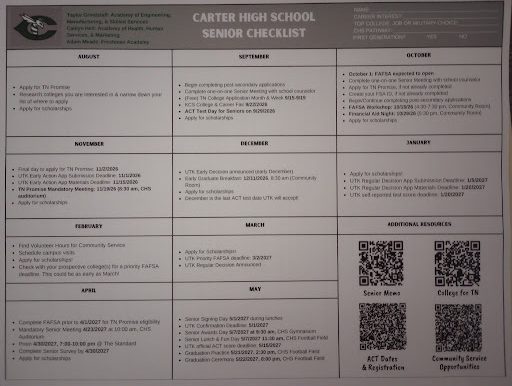
As the first semester of school reaches its midpoint, seniors have begun to consider their plans for after graduation. Carter would like its graduating class to be enrolled, enlisted, or employed after departing school, and post-secondary education appears to be a more common outcome within those choices. Higher education brings a slew of its own challenges – financial aid, scholarships, admission decisions – that college-bound seniors must navigate.
Abigail Lawson, an early graduate who leaves in December, finds herself handling these obstacles before her peers: “I do not feel fully prepared to start college, but it was my decision to graduate early.” Abigail plans to enroll in Pellissippi next fall while using the months before to prepare herself for higher education. “I plan to get a job after graduation because I do not know how much financial aid I will receive,” she explained. While she does feel pressured, Abigail knows, overall, that college is the course she needs to take, a sentiment mirrored in her peer, Ally Randolph.
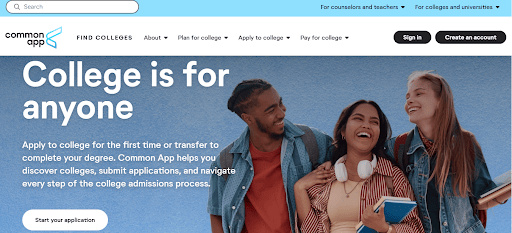
Although she graduates in May, Ally has already outlined her college plans. “College applications have not stressed me out because I use Common App, though I have faced trouble with scholarships,” she said. Common App is a website that features a conglomerate of colleges, allowing students to easily submit applications; while it can match students to scholarships, the ones Ally have reviewed have lofty requirements. Despite this setback, she has formulated an alternative plan if she does not receive adequate financial aid: attend a community college, then transfer to a university to avoid accumulating debt.