
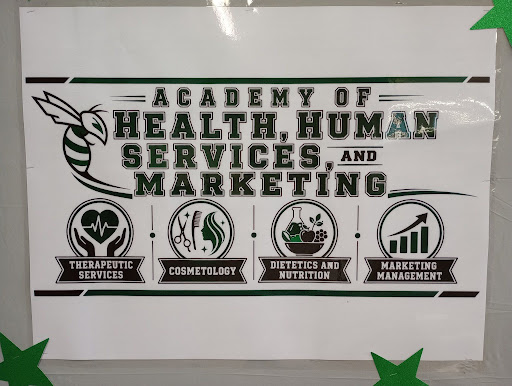
Knox County Schools reports that 93% of its students graduate, but is the implementation of 865 Academies why? The district claims these academies – specialized career-based classes – ensure students become enrolled, enlisted, or employed post-graduation; Carter, following district instruction, enacted the academy structure during the 2023-24 school year. Henceforth, after their freshmen year, students must select a pathway within Carter’s two academies to enroll in for the rest of high school.
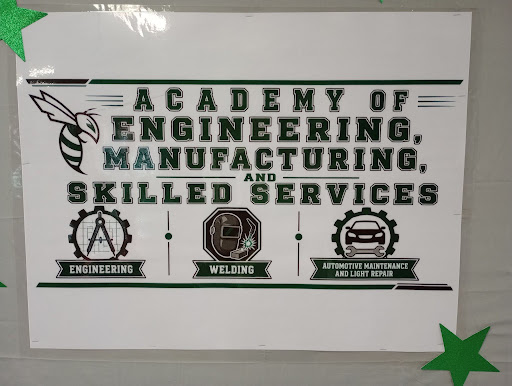
Carter’s academies focus on broad careers, either technical or service-based, yet the pathways within are narrow: marketing, health science, nutrition, cosmetology, welding, automotive, and engineering are the only available choices. Undoubtedly, they are an excellent opportunity for interested students to initiate their careers; however, even uninterested students are mandated to select a pathway. This is not to say that pathways should be eradicated; rather, students should not be forced to select a pathway.
Students interested in Carter’s academy selections will learn that the extensive titles are merely a mirage: the actual pathways are constrained, with only seven being between both academies. It is completely antithetical to shove disinterested students into specialized classes that require more time and resources when it could be better allocated to attentive students.
Enforcing a pathway congests student schedules because they are required to take a minimum of three levels. If a student is unhappy with their initial pathway selection and changes it their junior year, they are still expected to complete three levels, which can conflict with classes required for graduation. Similarly, it could prevent students from enrolling in electives that would complement their career choice. Personally, I want to be an author so selecting English-based electives would better refine my skillset as opposed to marketing, my pathway.
Additionally, why is there insistence on every student enrolling in a pathway when there is no evidence to indicate they are successful? I am a part of the 2023-24 trailblazers of Carter academies and we have not yet graduated, so it is too soon to claim academy triumph. Bluntly, academies ensure “graduating students will be… relevant to the… local economy” as stated by the Knoxville Chamber. Subjugating students to a bureaucratic plan to blatantly produce more workers makes them more likely to resent the opportunity, not rejoice. Of course, there is always the argument that students, future adults, must engage with tasks they resent because that is how the ‘real world’ operates, and while students do need to develop discipline from such, we must also consider that adults in the proclaimed ‘real world’ also have the option to simply refuse their task on principle, whereas we do not.
Pathways are an amazing opportunity for genuine students, but their outreach should not require every student’s participation. Before pathways these classes existed because certain students enjoyed them, not all; the same sentiment needs to be applied to the academy model.
 Carter Corps News